4 Oct 2026
Unlocking Flexible Table Limits Through Loyalty Tier Achievements in Portable Card Sessions
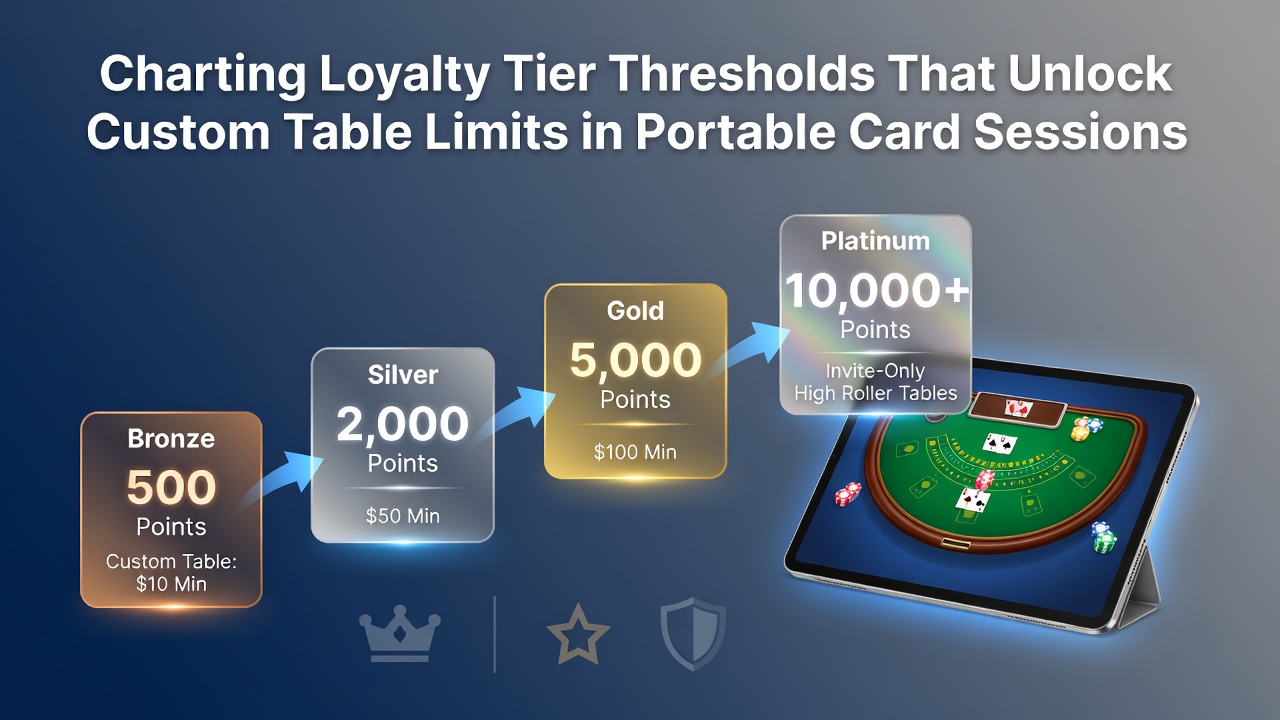
Portable card sessions have grown into a distinct segment of digital gaming where players access blackjack and similar table games through mobile devices and dedicated hardware, and loyalty programs now shape the boundaries of those experiences by linking tier progression to adjustable betting limits. Research from industry tracking services shows that operators establish specific point thresholds or activity milestones that players must reach before higher table limits become available, often scaling from standard minimums to customized maximums based on accumulated play data.
Core Mechanics of Tier-Based Limit Adjustments
Operators structure these programs around cumulative metrics such as hands played, total wagered amounts, and session frequency, with each tier granting access to progressively higher or more flexible table caps that reflect the player's established pattern. Data indicates that entry-level tiers typically maintain fixed limits aligned with regulatory baselines, while mid-tier advancements unlock options for players to request personalized adjustments within predefined ranges, and top tiers frequently permit broader custom configurations that adapt to individual bankroll management preferences during extended portable sessions.
Threshold Examples Across Major Platforms
One study of mobile gaming operators revealed that reaching 500 loyalty points in a 30-day window often activates the first custom limit tier, allowing players to increase table maximums by up to 50 percent compared with base settings, whereas accumulating 2,000 points typically opens the next level with further flexibility including multi-hand options and elevated stakes. Figures from platform analytics show that players crossing these thresholds experience measurable changes in available table configurations within 24 hours of milestone confirmation, streamlining the transition without requiring separate applications in many cases.
What's interesting is how these systems integrate real-time tracking through app interfaces, so users receive immediate notifications when their activity qualifies them for upgraded parameters, and the adjustments then apply across subsequent portable card sessions on the same device profile. Observers note that such automation reduces friction compared with traditional casino loyalty cards that once required manual verification at physical counters.
Regional Regulatory Influences on Tier Structures
Regulatory frameworks in various jurisdictions shape how loyalty tiers translate into table limit permissions, with licensing bodies requiring operators to maintain transparent documentation of threshold criteria and limit scaling formulas. Reports from the Nevada Gaming Control Board detail that portable gaming platforms must log tier advancement data separately from standard play records, ensuring audit trails cover every limit modification granted through loyalty progression. Similar requirements appear in other markets where authorities emphasize player protection alongside commercial flexibility.
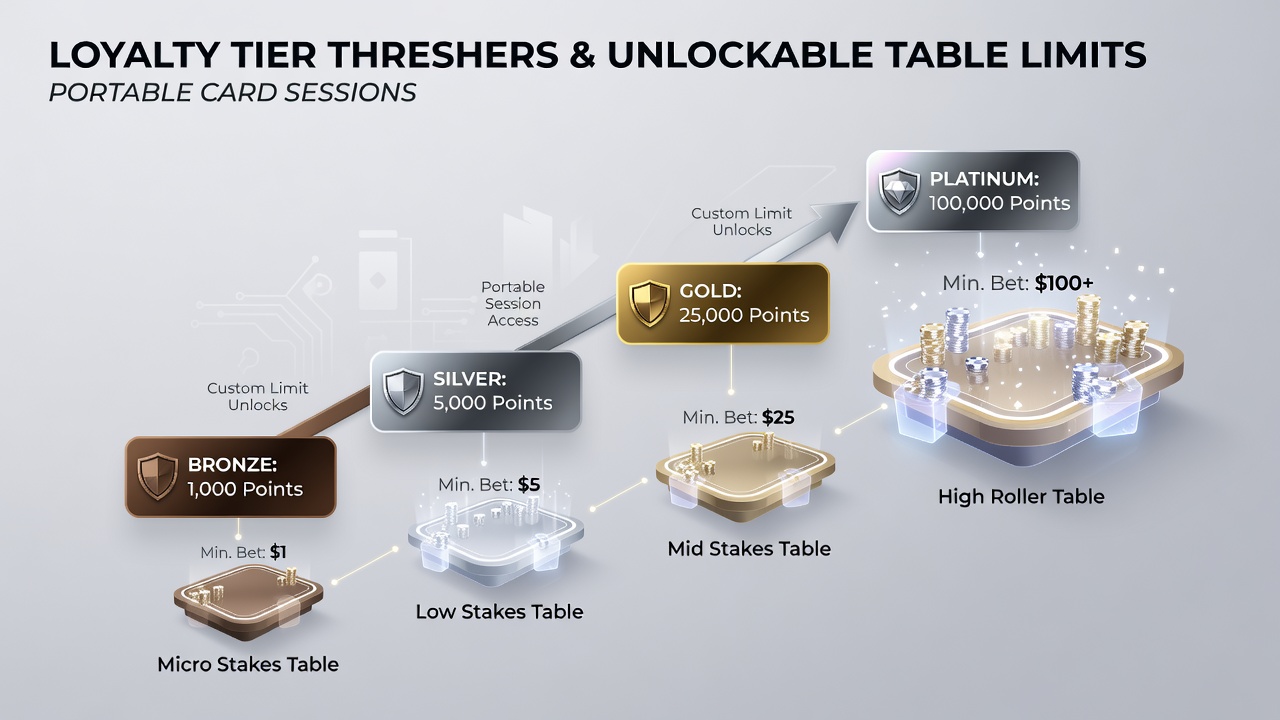
By October 2026 several operators had expanded their portable card offerings to include cross-device synchronization of loyalty tiers, allowing seamless limit adjustments whether users switch between smartphone, tablet, or dedicated portable terminals during a single extended session. Platform updates rolled out around that period incorporated enhanced encryption for tier status data, aligning with broader security standards that protect both player information and the integrity of limit configurations.
Player Behavior Patterns and Threshold Attainment
Analytics platforms tracking portable card activity indicate that consistent weekly engagement tends to accelerate tier advancement more reliably than sporadic high-volume bursts, because most programs weight frequency alongside total volume when calculating eligibility for custom table limits. Those who've examined aggregated datasets find that players reaching mid-tier status within three months often sustain longer average session durations once higher limits activate, suggesting the unlocked parameters influence how participants structure their play over time.
Industry reports further highlight that loyalty thresholds frequently incorporate bonus multipliers during promotional windows, temporarily lowering the points needed to unlock next-level table customizations, and these events tend to cluster around seasonal periods when portable gaming traffic peaks. Such mechanics create predictable cycles where players can plan their activity to coincide with accelerated progression opportunities.
Technical Implementation in Portable Environments
Developers embed tier verification directly into the session management layer of portable card applications, so limit changes occur automatically upon successful authentication against the loyalty database without interrupting ongoing games. This integration allows custom maximums to appear as selectable options within the betting interface once the relevant threshold has been confirmed, and the system logs each adjustment for compliance purposes.
Additional layers of verification, such as two-factor authentication tied to the loyalty account, have become standard in platforms handling elevated table limits, reducing the risk of unauthorized changes to personalized settings during mobile sessions conducted over public networks.
Conclusion
Loyalty tier thresholds continue to serve as the primary mechanism through which operators deliver customized table limits in portable card sessions, with clear milestone structures documented across multiple markets and supported by evolving technical infrastructure. Data from regulatory and industry sources shows consistent patterns in how point accumulation translates into expanded betting parameters, while October 2026 updates demonstrated further refinement in cross-device continuity and security protocols. These systems remain central to the operational model of portable card gaming as platforms balance player flexibility with established compliance requirements.